

Beef Ribs vs. Pork Ribs: What's the Difference?
One's the size of a small dinosaur bone, the other you can eat in three bites. Here's everything that actually separates beef ribs from pork ribs, and why you should probably just order both.
Find a Black's BBQ Near You
.svg)

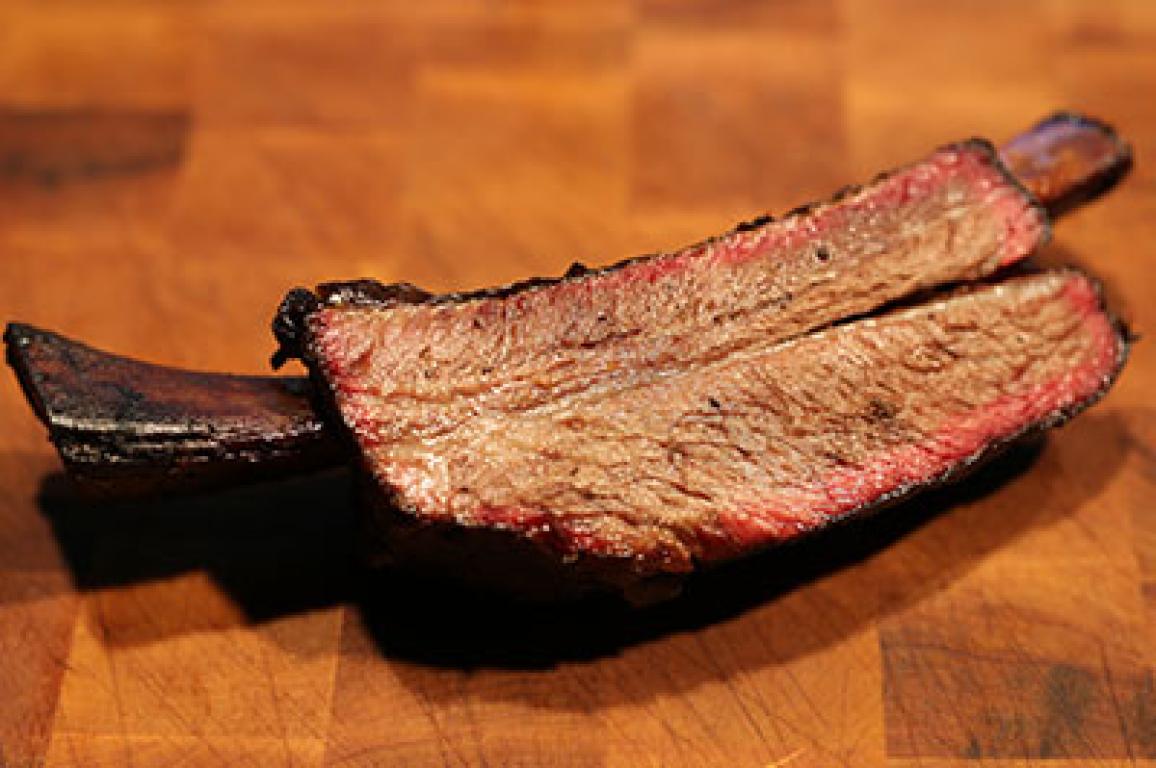
Most people know what to expect when they order pork ribs. Then a gigantic beef rib lands on the tray, and suddenly everyone at the table has questions.
Yes, it really is one rib. Yes, you may need both hands. And yes, we call it a dino rib.
Pork ribs don’t take up nearly as much room on your tray. You can order a couple, along with brisket or sausage, add some yummy sides, and you’ve got a little bit of everything.
Beef Ribs vs. Pork Ribs
For anyone deciding what to order, these are the main differences:
- Beef ribs are much larger. One can easily become the center of the meal.
- Pork spare ribs are easier to add to a mixed plate. Order a rib or two and try another meat while you’re at it.
- Beef ribs are big, beefy, and rich. All that marbled meat piled on one big ol’ bone is why people call them brisket on a stick.
- Pork ribs should have a little tug. Take a bite, and the meat should come away clean without the whole thing slipping off the bone.
- Beef ribs take their time. Their size alone means they’ll need to sit on the pit longer than pork ribs.
Where Each Rib Comes From
The giant beef ribs at Black’s are plate ribs. They come from the lower section of the cow and have a thick portion of meat sitting over a long bone. That meat carries plenty of marbling, which accounts for much of the richness people notice.
Pork ribs come from the lower part of the pig’s rib cage. Their bones are typically flatter, and the meat and fat are pretty symmetrical around the bones.
You can see an obvious difference before you slice either one. The beef rib stands tall on the tray. A pork rib sits flatter and feels more familiar in your hand.
What Does a Giant Beef Rib Taste Like?
If brisket is usually your favorite BBQ, there’s a good chance you’ll like the beef rib. The flavor is unmistakably beefy, and the meat becomes soft after its long stay on the pit. Near the outside, you get plenty of seasoning and bark. Move closer to the bone, and the meat is softer and richer.
Just know dino ribs alone are a lot of food. Some guests take on a whole rib themselves. Others set it in the middle of the table and share. Either approach works.
What Is Different About a Pork Spare Rib?
Pork ribs? You want the meat tender, but you don’t want it dropping into your lap before you get a bite. Sink your teeth in and give it a little pull. The bite comes away, the rest stays on the bone—that’s about right.
They won’t crowd your tray, either. Order a pork rib (or a few), some brisket, and a link of homemade sausage, and you’ve got yourself a Texas Trinity to enjoy solo or share with a group.
How Long Do the Ribs Stay on the Pit?
Pork spare ribs usually hang out on the smoker for three to four hours at about 275 degrees. Big beef ribs settle in for a longer stay. With that much meat around the bone, they’ll be ready when they’re ready.
Three or four hours gets us in the neighborhood. After that, we leave it up to the pitmaster. Meat pulling back? Bark looking right? Probe going in easy? Good. If not, shut the pit and give them a little longer. Ribs don’t care what the clock says.
How We Season Them
Salt, pepper, a touch of red pepper, then onto the post oak pit they go. We’re not trying to bury the meat under a pile of seasoning. You should know whether you’re biting into beef or pork before anybody tells you.
Which One Belongs on Your Tray?
Depends on what kind of hungry walked through the door with you. Want to wrestle with one big ol’ rib or pass it around the table? Go beef. It’s smoky, rich, and big enough to take over the whole tray.
Pork spare ribs are better suited to a plate with a little of everything. They sit nicely beside brisket or sausage and won’t crowd out your potato salad or beans.
If this is your first visit and everyone at the table is willing to share, get both. Pass them around and see which plate comes back empty first.
Beef and Pork Rib FAQs
Are beef ribs larger than pork ribs?
Yes. Black’s plate-cut beef ribs have longer bones with considerably more meat around each bone. Pork spare ribs are smaller and flatter.
Do beef ribs take longer to smoke?
They generally do. Their size and thickness mean the fat and connective tissue take longer to soften. Our pork spare ribs usually spend about three to four hours on the pit.
Should pork rib meat fall off the bone?
Around here, we prefer it to stay on the bone. It should give a nice pull, without falling apart in your hand.
Can one person eat a giant beef rib?
You can definitely give it a try! Some people can conquer it, but sharing is always an option. A giant beef rib can be a meal by itself, especially once sides are added.
Settle the Rib Debate at Black’s
Enough comparing—grab one of each and dig in. You’ll know which rib has your vote before the tray is empty.
Find us in Lockhart, Austin, New Braunfels, or San Marcos.