

How to Get Crispy Smoked Chicken Wings
Smoked wings should be crispy. If yours aren't, Barrett Black — fourth-generation pitmaster at the Original Black's BBQ — breaks down exactly where most people go wrong and how to fix it.
Watch the Video
.svg)

Chicken wings are one of the most crowd-friendly things you can cook. They're shareable, versatile, and hold up well when you're feeding a group. But smoked chicken wings have a reputation for coming out soft — and that's usually a prep and technique problem, not a smoking problem.
In this video, Barrett Black breaks down the full process from butchering to basting, and explains exactly why crispy smoked wings are easier to pull off than most people think.
Start With Whole Wings
Most wings at the store are already split, but Barrett prefers buying them whole.
Pre-cut wings go through a high-speed butchering process that breaks a lot of bones along the way. When bones snap, marrow leaks out — and that means discoloration and lost flavor before the cook even starts. Buying whole chicken wings and cutting them yourself gives you more control and a better end product.
The cut is simple. Find the joint between the drumette and the flat, slice through the skin, break the joint slightly, and cut right between the bones. No hacking or force. Then do the same at the wing tip.
Don't Throw Away the Wing Tips
The wing tips go in a separate pile — not the trash.
There's not much meat on them, but there's plenty of flavor. Barrett fries them down in a little vegetable oil, browning them as much as possible without burning, to pull out all that chicken fat, cartilage, and collagen into the oil. What you're left with is a concentrated, fried-chicken-flavored basting oil.
That oil goes right back onto the wings halfway through the cook. It adds fat to the skin, encourages crisping, and gives every bite a little of that deep-fried-chicken richness — without ever leaving the smoker.
Salt and Pepper. That's It.
At Black's, every meat starts with salt and black pepper. Smoked wings are no different.
Salt acts quickly, penetrating the meat, seasoning it, and keeping its moisture intact during cooking. Pepper brings out the food's flavor.
Sauce, sugar, and glazed coatings all come later, as optional toppings for the wings.
If you apply them early and leave them in the heat too long, they dry out, burn, and lose most of what made them good in the first place.
The Cook
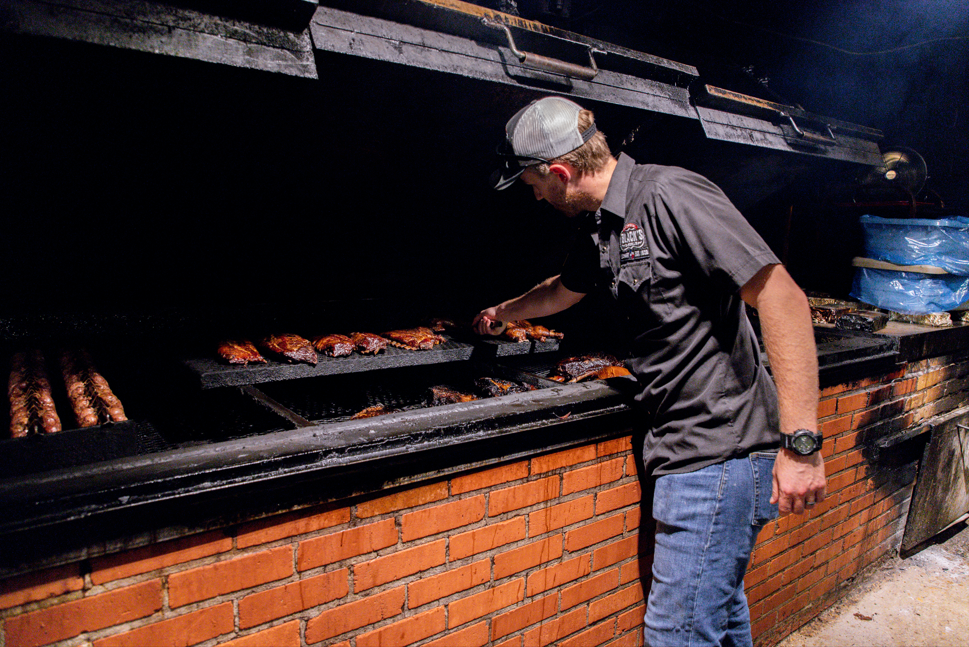
Barrett runs these wings at around 300°F on the same brick pit his grandfather built in the 1940s — still going strong every single day.
Target internal temp is 170–175°F. That's the zone where the fat has fully rendered, the collagen has broken down, and the skin has had enough time and heat to go from soft to crisp. Plan for about an hour to an hour and a half, depending on your setup.
Baste with the wing tip oil partway through. That's when the skin is starting to set up and is ready to take on that extra layer of fat.
Sauce on the Side
Once the wings come off, Barrett finishes with a dipping spread rather than tossing everything in one sauce.
His go-to is a homemade ranch — garlic, dill, sour cream, buttermilk, lemon juice — mixed with Norma Jean’s Barbecue Sauce and a touch of Black's habanero sauce for a little kick. But the point isn't the specific sauce. It's the approach. When you build a great base with smoke, salt, and pepper, you give everyone at the table the freedom to finish their wings exactly how they like them.
That's the whole idea.