

Lean or Moist Brisket: Which Should You Order?
Lean vs. moist brisket: learn the difference between the flat and the point, how each one tastes, and how to order brisket like a Texas regular.
Visit a Black’s BBQ Location


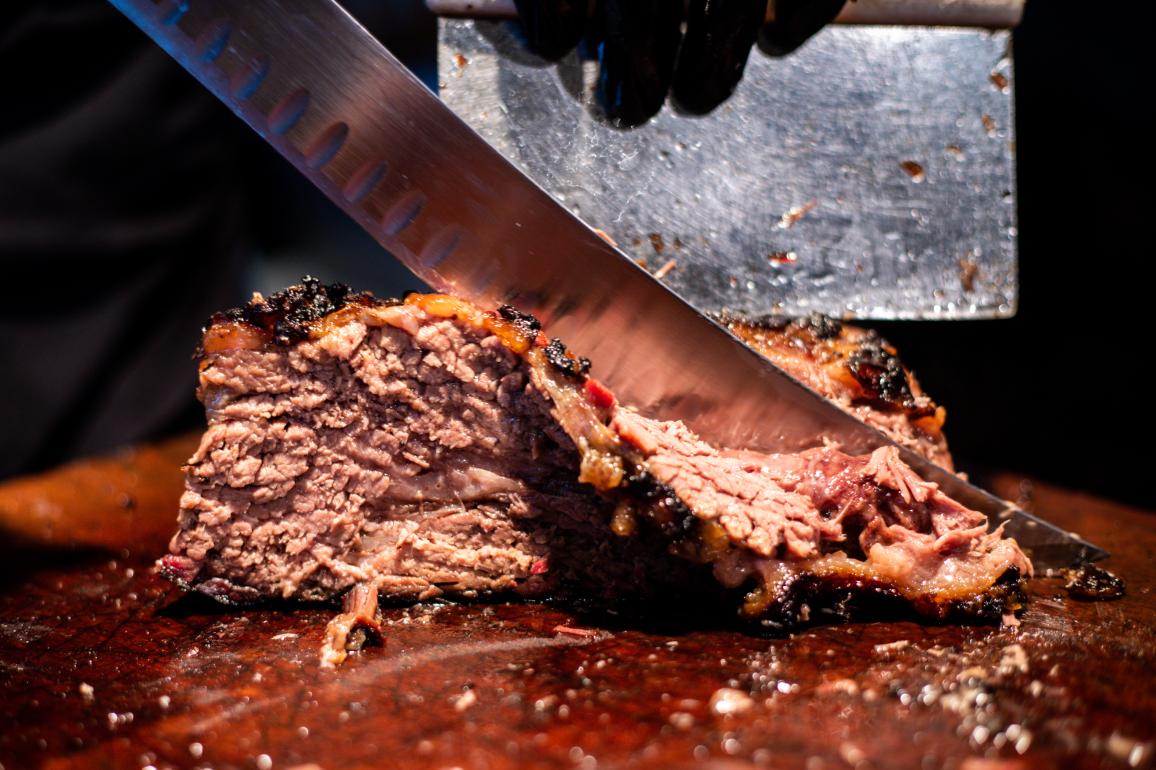
By the time you reach the cutting block, you’ve probably been smelling post oak smoke for a while, and you’re ready to order half the menu. Then the person holding the knife asks, “Lean or moist?”
If you’ve ever frozen up at that moment, you’re not alone. Lean vs. moist brisket is one of the most common questions first-timers have about Texas BBQ, and either answer gets you a great tray. Once you know where each cut comes from, the choice gets a lot easier.
What’s the Difference Between Lean and Moist Brisket?
A whole brisket is actually two different muscles. The flat is a long, thin muscle that makes up most of the brisket. The point is a thicker, rounder muscle that sits on top of one end, with a seam of fat running between the two.
Both muscles cook together on the pit, but they don’t end up the same. The flat is leaner. The point has a lot more marbling running through it. After a long, slow cook, those differences show up in every slice. When you order lean, your slices come from the flat. When you order moist, they come from the point. (It’s also why the two get sliced a little differently, which we cover in Brisket Is Sliced Against the Grain.)
What to Expect From Lean Brisket
If you want to taste the beef itself, lean is the way to go. The slices are a little firmer, hold their shape well, and have a clean, smoky flavor with a strip of bark along the edge. There’s still some fat around the outside, but not much marbling inside the meat. Because the flat is easier to carve, lean also tends to give you the neatest-looking slices on the tray. (If you’re slicing at home, see How to Slice Brisket Without Messing It Up.)
Lean is a great pick if you like a beefier bite, want a slice that holds up in a sandwich, or just aren’t a big fan of fat. Don’t mistake lean for dry, though. When it’s cooked right, a good lean slice is tender and juicy and will bend over your finger without falling apart. A lot of pitmasters will tell you lean is the real test of a brisket. Moist has plenty of fat to keep it juicy, but lean only turns out tender if the whole cook went right.
What to Expect From Moist Brisket
Moist brisket is richer and softer. The slices are loaded with marbling that renders down during the cook, so every bite is soft and buttery and nearly falls apart when you pick it up. (We dig into how that happens in The Secret to Perfectly Rendered Fat.)
Moist is a favorite with a lot of Texas BBQ regulars. All that fat carries a ton of flavor, and it keeps the meat juicy even when a slice sits on your tray for a while. It’s also the same part of the brisket used for burnt ends, if you’ve ever wondered where those come from. (More on that in What Are Burnt Ends, and Why Are They So Popular?)
Is Moist Brisket the Same as Fatty Brisket?
Yes. “Moist” and “fatty” are two names for the same thing: slices from the point. Some joints use one word, and some use the other, but you’ll get the same cut either way.
How to Spot a Good Slice
Whichever side you order, a few things tell you the brisket was cooked right. A good lean slice should bend without cracking and feel moist when you bite it. If it’s dry or crumbly, the brisket probably went too long. A good moist slice should have fat that’s soft and almost translucent, not chewy or rubbery. If the fat still has a bite to it, the brisket likely came off the pit too soon.
So Which One Should You Order?
It really comes down to what you like. If you’re the kind of person who trims the fat off a steak, start with lean. If you’d pick a ribeye with plenty of marbling every time, try moist.
If you really can’t choose, order some of each. A lot of folks get a little lean and a little moist so they can taste the difference side by side. You’ll figure out pretty quickly which one you keep reaching for.
How Do You Order Brisket at a Texas BBQ Joint?
At Black’s, brisket is sold by weight and sliced fresh to order right in front of you. Just tell the person at the cutting block how much you want and which style, something like “a half pound of moist” or “a quarter pound of each.” A good rule of thumb is about one pound of meat for every two adults, and our guide on how many pounds of BBQ you need can help with bigger groups.
We also serve chopped brisket, which mixes lean and moist together. It’s a great choice for sandwiches.
Not sure what you’re in the mood for? Ask. The crew behind the counter talks brisket all day and can point you in the right direction.
Taking Brisket Home
If you’re taking some home, moist tends to hold up a little better because all that fat helps keep it from drying out. Lean reheats just fine, too, as long as you warm it gently. Our guide to reheating brisket and BBQ without drying it out walks you through it.
Why Great Brisket Starts Before the Pit
Whether you go lean or moist, the brisket can only be as good as the beef it starts with. That’s why we smoke Certified Angus Beef over post oak with a simple rub. Both cuts get the same care and the same time on the pit. The only difference is which side of the brisket they come from.
Pick Your Side
The only real way to settle the lean or moist debate is to taste them for yourself. Come see us in Lockhart, Austin, New Braunfels, or San Marcos and ask for a little of each. Then come back and tell us which one you picked.