

How to Smoke The Juiciest Turkey Breast
From seasoning to finish, here’s how to smoke a turkey breast that stays juicy and delivers clean, balanced flavor.
Watch the Video
.svg)

Turkey breast has a reputation—and honestly, it earned it.
It’s lean, it cooks in dry heat, and if you miss your window even a little, it dries out fast. That’s why so many people write it off. But when it’s handled the right way, turkey can be one of the most rewarding things to pull off the pit.
At Black’s BBQ, we don’t try to fight the cut. We work with it. And that starts with understanding what turkey breast actually needs.
In this video, Barrett Black walks through what it's like to smoke a juicy turkey breast, and we capture his tips here in this blog.
It Starts With Moisture
Turkey breast doesn’t have much fat to rely on. There’s no marbling to protect it, no cushion if you overcook it. So everything we do is built around holding onto moisture from the start.
Most turkey you’ll find today is already brined or injected with a salt solution. That’s a good thing. It gives you a head start. We still season it on the outside, letting that salt act like a light dry brine that works its way into the meat and helps it stay juicy as it cooks.
From there, it’s about not undoing that advantage.
The Cut Makes a Difference
We go with boneless, skin-on turkey breast—what the industry calls a “lobe.”
Keeping the skin on matters more than people think. It acts like a protective layer, holding in moisture and carrying flavor as it renders. At the same time, going with boneless turkey breast gives you more surface area, which means more smoke and a better finish on the outside.
Before it ever hits the pit, we take a minute to shape it. Trim off anything too thin, tuck in loose edges, and get it as even as possible. The more uniform it is, the more evenly it’s going to cook.
Keep the Seasoning Out of the Way
Turkey doesn’t need much.
We stick to salt and a light touch of black pepper. No binder, no heavy rub. The goal is to let the natural flavor of the turkey come through, not cover it up.
If we’ve got time, we’ll let it sit overnight after seasoning. That gives the salt time to do its job—working into the meat, helping it hold moisture, and setting you up for a better cook the next day.
Let the Pit Do the Work
We run our pits around 275°F with post oak, but the bigger idea is consistency. You don’t need anything complicated, just steady heat and a little patience.
Turkey breast takes a few hours to come together. As it cooks, the skin starts to render, the outside picks up color, and the meat slowly tightens up without drying out.
The key moment comes near the end. We’re not cooking it all the way to finish on the pit. We pull it at about 160°F, just before it crosses the line.
The Part Most People Skip
Once it comes off, we wrap it.
That step is what separates a dry turkey breast from a juicy one. Wrapping holds in all the moisture that’s built up during the cook and lets the turkey gently carry over to that final 165°F without taking on more direct heat.
Inside that foil, all those natural juices stay right where they belong.
What You See Isn’t Always What You Think
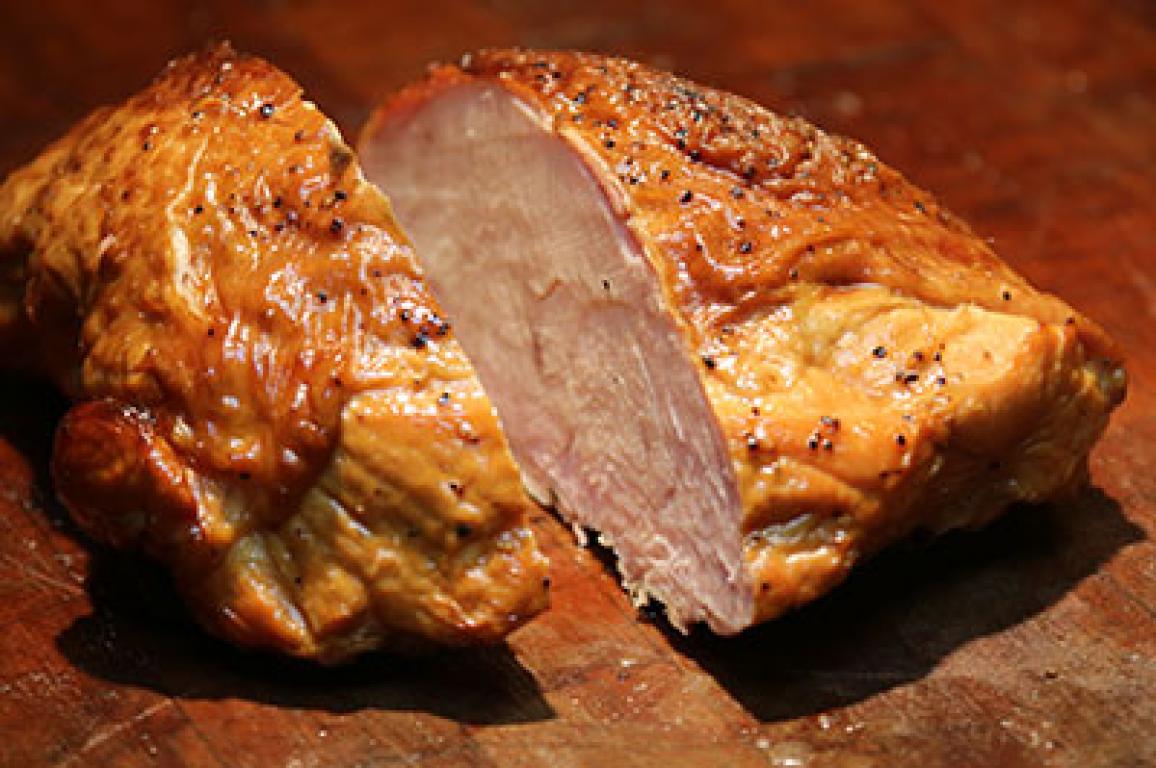
When you slice into it, you might notice a pink hue, especially near the edges.
That’s not undercooked—that’s smoke.
It’s a sign that the turkey picked up flavor the way it should. As long as you’ve hit temperature, you’re right where you need to be.
The Payoff
With smoked turkey breast, when everything comes together, you get something completely different from what people expect.
The slices are tender. They hold their shape, but they pull apart easily. There’s a light smoke to it, a natural sweetness, and just enough seasoning to bring it all forward without getting in the way.