

What Makes Great Brisket Bark
The bark on a brisket is not just crust. It is the result of hours of heat, smoke, and patience working together. At Black's BBQ in Lockhart, Texas, building great bark is something we have been doing for over 90 years.
Check Out Our Menu
.svg)

Walk into any Black’s BBQ restaurant and one of the first things you’ll notice about a well-smoked brisket is the bark.
That deep, almost black crust on the outside is not burned, and it’s not a mistake.
In fact, it’s the whole point.
At Black's BBQ in Lockhart, Texas, building bark is something four generations of pitmasters have spent over 90 years perfecting. Here is what it is, why it matters, and some fun facts about how it happens.
What is Bark on Brisket?
Bark is a dark, firm crust that forms on the outside of a brisket during a long smoke. It looks almost black when it's done right, and if you've never seen it before, it's easy to wonder if something went wrong. Nothing went wrong. That crust is exactly what you're after.
Two things are happening at the same time to build it. The first is what scientists call the Maillard reaction, which is really just a fancy way of describing what heat does to the surface of the meat over time. The proteins and sugars transform, hundreds of new flavor compounds develop, and that deep, dark color starts to form. You've seen this happen before on a great pan sear or a perfectly baked loaf of bread. On a smoker, it just happens much more slowly, and the results are that much more rewarding for it.
The second thing going on is that the surface of the meat is constantly releasing moisture into the dry heat around it. As that moisture evaporates, it pulls smoke, seasoning, and rendered fat back toward the surface, where they concentrate and keep building up. The longer that process runs uninterrupted, the deeper and more complex the bark gets. Time is really doing the heavy lifting here, and that's the whole secret.
Why Bark Matters
Bark is not decorative. Every bite of well-smoked brisket should have bark in it, and when it does, it changes everything about the eating experience. The contrast between the firm, intensely flavored crust and the soft, juicy interior is what makes Central Texas BBQ brisket unlike anything else.
The bark also does practical work during the cooking. That hardened exterior acts as a seal, slowing the loss of internal moisture during the long hours on the smoker. A well-developed bark is part of what keeps a properly smoked brisket juicy all the way through to the center.
What Builds Bark
Wondering how to get bark on brisket?
Several factors work together to produce great bark on brisket, and getting any one of them wrong can mean the difference between a beautiful crust and a pale, soft exterior.
Seasoning is the foundation. At Black's BBQ, we keep it simple: coarse salt and black pepper. This is the Central Texas BBQ tradition, and it works because both ingredients contribute directly to bark formation. Salt draws moisture to the surface early in the cook, which then evaporates and begins the crust-building process. Coarse black pepper creates a physical texture on the surface that catches smoke and holds it. Together they form the rub, and when applied correctly the night before, or at minimum a few hours before the cook, they give the seasoning time to penetrate the meat before the heat begins.
Time and temperature matter just as much. At Black's BBQ, we cook at 275°F, the same temperature our family has always used. This range is hot enough to drive the Maillard reaction and evaporation, but low enough to give the bark time to develop without burning. Too high and the surface chars before the interior is anywhere close to done. Too low and the bark never fully sets.
The smoker environment plays a role, too. An offset smoker running dry hardwood like post oak creates the dry, convective heat that bark needs. Humid cooking environments, like a tightly wrapped brisket or a water-heavy smoker, produce tender meat but interrupt the bark-building process. This is why at Black's BBQ, we let our briskets ride unwrapped for a significant portion of the cook. The bark has to earn itself before anything changes.
The Stall and What It Means for Bark
If you've ever smoked a brisket at home, you may have noticed something strange happening around the 150 to 170°F mark. The temperature just stops climbing. It can sit there for hours and feel like nothing is happening. This is called the stall, and it's one of the most common moments where home cooks start to panic.
Our advice: don't panic.
This is actually one of the best things that can happen to your bark. What's going on is that the surface of the meat is releasing moisture faster than the heat can push the internal temperature up. All that evaporation happening on the outside is doing exactly what bark needs: concentrating flavor, drying out the exterior, and building that crust up layer by layer. The brisket isn't stuck. It's working.
Many home cooks wrap their brisket at the stall to push through it faster. There is nothing wrong with that. But wrapping pauses bark development, and whatever crust has formed at that point is what you are going to finish with. The longer you can ride out the stall unwrapped while managing your temperature, the more brisket bark you will end up with.
What Great Bark Looks Like
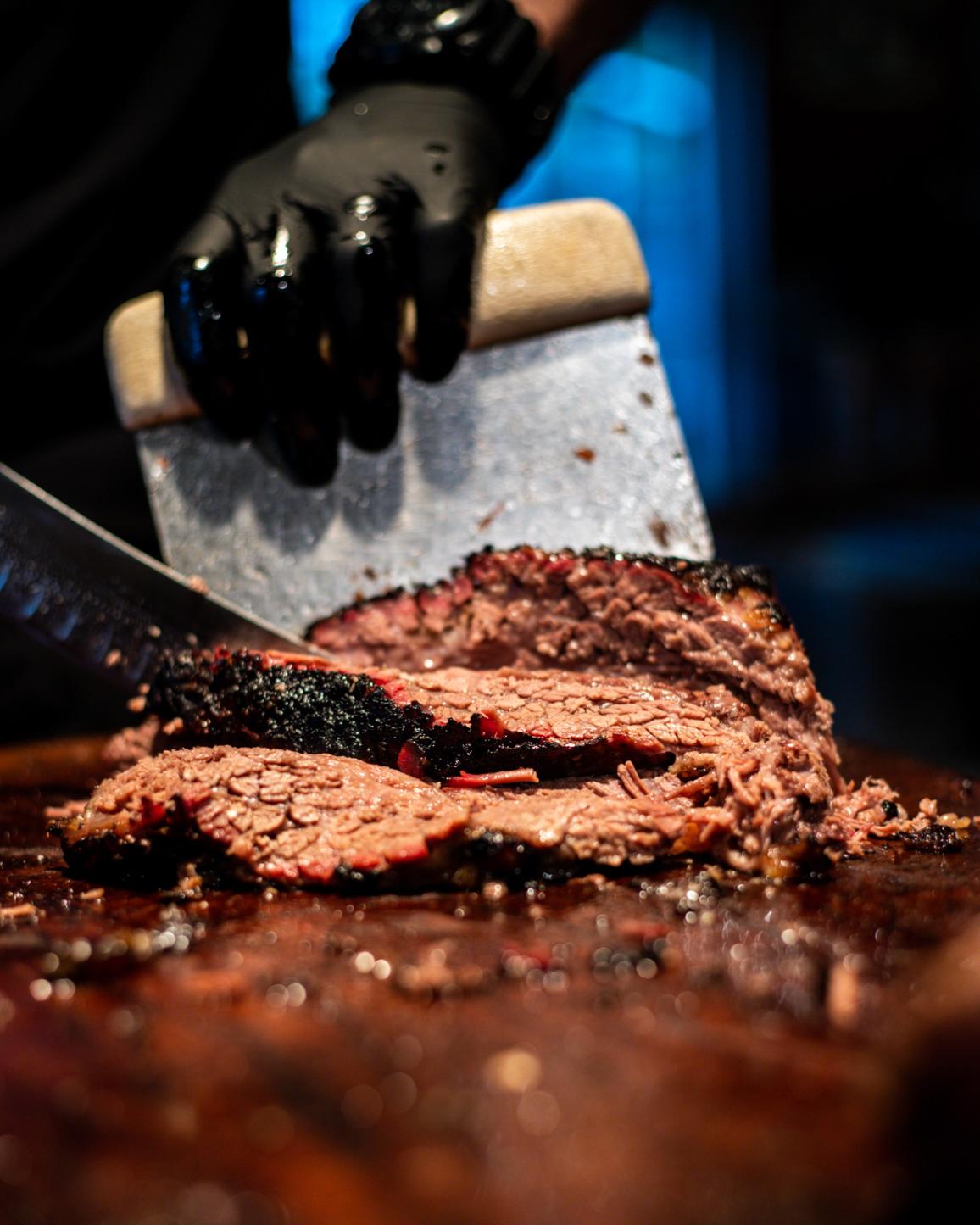
Great bark on brisket should be deep mahogany to near black on the outside, firm enough to hold its shape when sliced, but not so hard that it shatters or tastes bitter. It should smell of smoke and black pepper. When you press it, it should not feel wet or soft. And when you slice through it, the contrast between the dark crust and the pink smoke ring just beneath it is one of the most satisfying things in all of Texas BBQ.
At Black's BBQ in Lockhart, Texas, that is what comes off our pits every single day. It has looked and tasted that way for over 90 years, and it will look and taste that way the next time you come see us. We have locations in Lockhart, New Braunfels, Austin, and San Marcos. Come taste the bark for yourself.