

How to Find Hot Spots on Offset Smoker
Before any brisket goes on a new smoker, the pitmasters at Black's BBQ in New Braunfels run a biscuit test. It is one of the most useful things a backyard cook can do to understand their pit. Here is how it works.
Watch The Video
.svg)

Getting to know a new offset smoker takes time. Every pit cooks differently, and understanding where the heat moves, stalls, and concentrates is the difference between a confident cook and a frustrating one. At Black's BBQ in New Braunfels, Texas, Brandon Anderson, General Manager, put their new thousand-gallon offset through one of the most practical tests a pitmaster can run: the biscuit test. Here is what it revealed and how you can do the same thing at home.
What Is the Biscuit Test?
The biscuit test is exactly what it sounds like. You load your smoker from end to end with canned biscuits, run them at the manufacturer's recommended temperature, and let the heat do the talking. The biscuits are not the point. The color is. Where biscuits burn, you have a hot spot. Where they come out pale and doughy, you have a cool zone. Everything in between gives you a visual map of how heat moves through your particular cooker.
As Brandon puts it: "It gives you a really good visual representation of how these biscuits are being cooked." No guesswork, no burned brisket. Just a clear picture of your pit before anything important goes on the grates.
Why This Works Better Than a Thermometer
Thermometers tell you the temperature at one fixed point. An offset smoker has dozens of microclimates happening at once, from the firebox end to the stack end, from the top rack to the bottom rack. A single gauge reading does not tell you what is happening three feet away. Biscuits cover the entire cooking surface at once, showing you the full picture in a single cook.
How to Run the Biscuit Test
What You Need
- Canned biscuits, enough to cover your entire cooking surface with even spacing
- A fully preheated offset smoker
- A timer
Setting Up
- Fully preheat your smoker before loading any biscuits
- Open your smoke stack completely. Full airflow is important for an accurate reading.
- Load biscuits across every rack from end to end, spaced as evenly as possible.
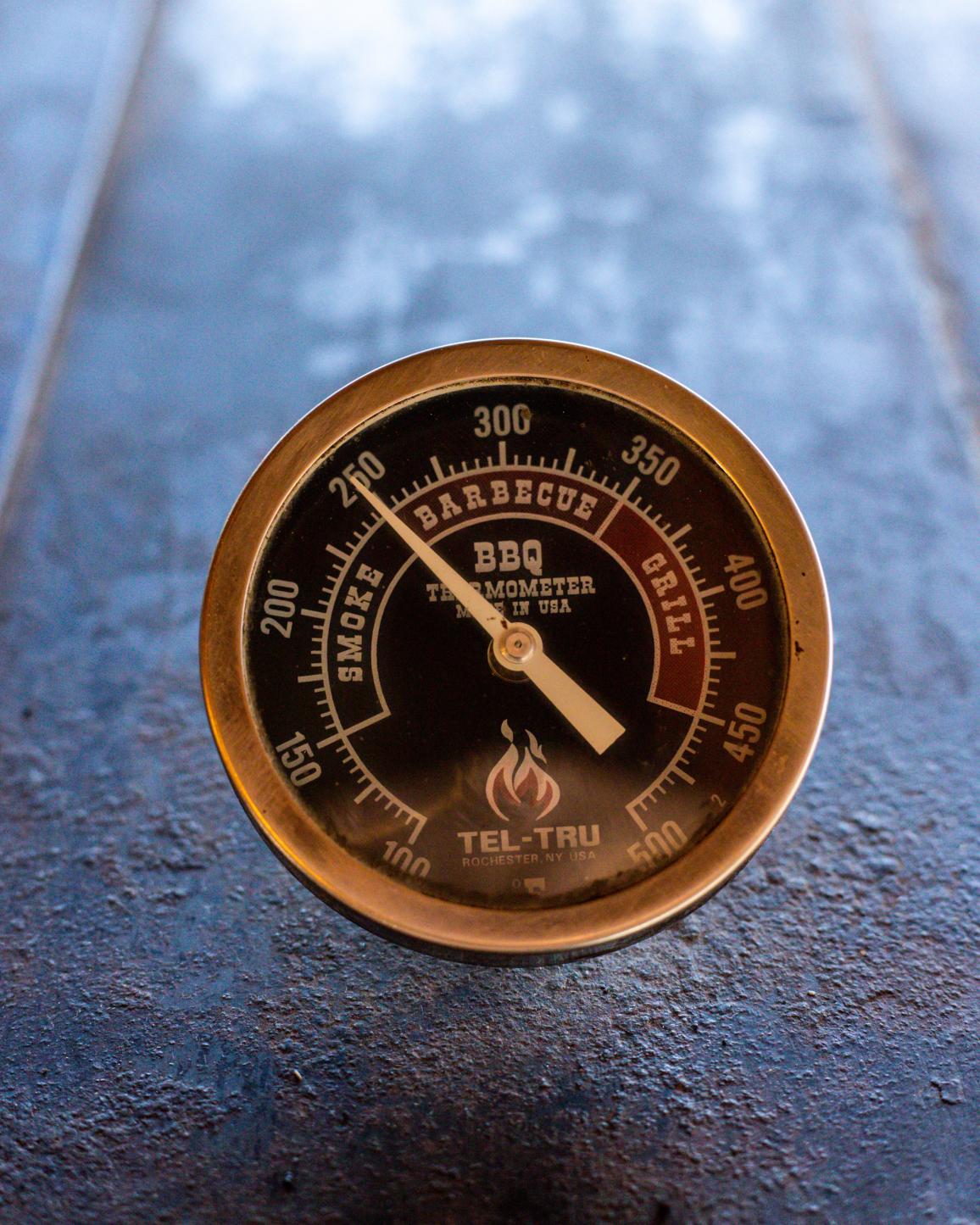
- Aim to hold a temperature of 300 to 325°F throughout the cook. This is the temperature range at which most canned biscuits are designed to cook, yielding the clearest results.
The Cook
- Set a timer for 15 minutes and check the biscuits at the halfway mark without extending the cook time.
- Note the color gradient across each rack at the 15-minute check. You will already be able to see which zones are running hot.
- Close the smoker and let the biscuits finish for another 15 minutes
- Pull and assess the full result across every position
What You Are Looking For
- Closest to the firebox: This will be your hottest zone. Biscuits here will brown fastest and may burn before the rest of the cooker catches up. Brandon describes this zone as one where "the heat and smoke come right past the baffle plate and go straight up." On the thousand-gallon pit at Black's BBQ New Braunfels, the biscuits closest to the firebox were hockey pucks at the 30-minute mark.
- Middle of the cooker: Expect a gradient here. Biscuits on the leading edge toward the fire will color faster than those toward the back. This is your most usable cooking zone for most cuts.
- Closest to the stack: This will be your coolest zone. Biscuits here may still be soft and doughy when the rest of the cooker is done. Brandon noted the stack-side biscuits were "still really doughy on the inside" at the 15-minute mark, while the firebox end was already burning.
- Top rack vs. bottom rack: The top rack runs hotter than the bottom in most offsets. At Black's BBQ, the bottom rack was remarkably even across the full length of the pit. "Everything down here on the bottom looks pretty uniform," Brandon noted. "I'm actually really happy with that."
What to Do With What You Learn
Once you have your map, you can cook with intention rather than hope. Brandon breaks it down practically:
- The zone closest to the firebox is best for "something that's going to cook hot, something that's going to cook fast, something that you're going to want to make sure that you are keeping an eye on constantly." Sausage and bratwurst work well here.
- Water pans placed near the firebox and baffle plate help moderate the hottest zone and add moisture to the cook.
- Long cooks like brisket and ribs belong in the middle and toward the stack end, where heat is more consistent and manageable.
- The cool zone near the stack is useful for holding finished meat or for cuts that need a gentler environment.
A Few Things to Know
- This test works on any offset smoker. It does not translate well to a standard kettle grill, but any offset or indirect cooker will benefit from it.
- Run the test every time you cook on a new pit or a pit that has been significantly modified. Heat patterns can change.
- Keep your smoke stack fully open during the test for the most accurate reading.
- The biscuits from this test are not great eating. But as Brandon found out on camera, with a little butter, they are "a lot more pleasant than I thought."
At Black's BBQ in New Braunfels, Texas, this is the kind of detail that goes into every cook before a single piece of brisket, sausage, or rib ever hits the grates. If you want to taste what that level of attention produces, come see us. Black's BBQ serves Central Texas BBQ across four locations in Lockhart, New Braunfels, Austin, and San Marcos.