

What Does “Low and Slow” Really Mean in BBQ?
Low and slow is the most famous phrase in Texas BBQ, but it’s not as mysterious as it sounds. It comes down to a temperature range, a lot of time, and cuts that need both.
Visit a Black’s BBQ Location


Ask anybody in Texas how to make great BBQ, and you’ll probably hear the same three words: low and slow. It’s on T-shirts, menus, and just about every BBQ sign between here and the Gulf. But if you ask what it actually means, the answers get a lot fuzzier.
How low is low? How slow is slow? And does every cut of meat need it? We’ll walk through all three, along with the numbers we use on our own pits.
What Does Low and Slow Mean?
There’s nothing complicated about it. You need a lower temperature than you’d use on a grill and a lot more time than most people expect. (For a closer look at how that differs from grilling, see Smoked vs. Grilled: What’s the Real Difference?)
The reason it works comes down to collagen, the tough connective tissue that runs through cuts like brisket and pork shoulder. Given enough time at a gentle temperature, collagen breaks down into gelatin, and a cut that would be chewy off a hot grill turns tender and juicy. (We break down the science in How Smoking Turns Tough Cuts Into Tender BBQ.)
How Low Is Low?
For most BBQ, “low” means somewhere between 225 and 275°F. Compare that to a grill, which usually runs 350°F or hotter, and you can see why the two produce such different results.
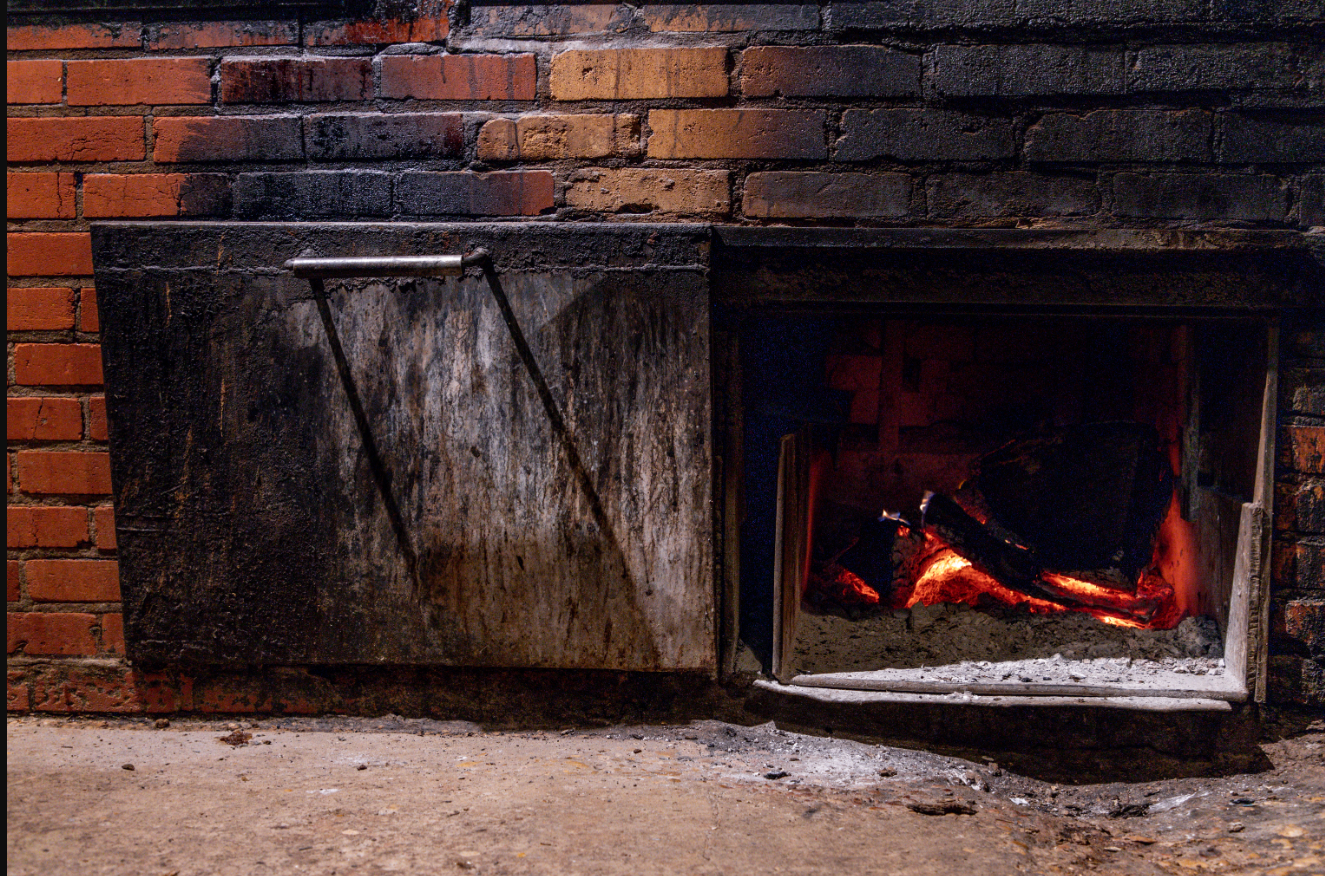
Within that range, every pitmaster has a favorite spot. Some like the gentle end around 225°F; others run their pits closer to 275°F. Both count as low and slow. At Black’s, we keep our pits around 225-250°F. What matters more than the exact number is keeping the temperature steady for the whole cook. (Our guide on fire management covers how we do it.)
How Long Does Low and Slow Take?
That depends on the cut. Bigger, tougher cuts need a lot more time than smaller ones. Here’s a rough idea of what to expect at low and slow temperatures:
Brisket usually takes 10 to 16 hours, depending on its size and how hot the pit runs. Ours spend about 14 to 16 hours on the pit. (See how our pitmasters handle all those hours in How Our Pitmasters Perfect Brisket Every Day.) A pork shoulder takes around 10 to 14 hours. Beef ribs typically need 8 to 12 hours (our dino ribs sit on the longer end), and pork spare ribs need 5 to 6. Turkey breast is quicker, usually 3 to 5 hours, and sausage often needs only a couple of hours.
Treat those as starting points. Pitmasters judge doneness by how the meat looks and feels more than by the clock.
Knowing When It’s Done
Our pitmasters keep an eye on the thermometer, but they don’t pull a brisket until it feels right. They slide a probe into the thickest part of the flat, and if it goes in and out without much push, the brisket is ready. If it still grabs, it needs more time.
Plenty of cooks also run into the stall along the way. That’s when the internal temperature of a big cut like brisket stops climbing for hours, even though the pit is holding steady. This happens because moisture evaporates from the meat’s surface and cools it down. It’s completely normal, and it’s another reason low-and-slow cooks take so long. Many pitmasters will wrap the brisket in butcher paper partway through to help push it through the stall without losing the bark. We compare the options in Butcher Paper vs. Foil: Which Is Better for BBQ?
When the meat comes off the pit, give it a good rest before slicing so the juices have time to settle. More on that in Why Resting Brisket Matters as Much as Smoking It.
What’s the Difference Between Low and Slow and Hot and Fast?
Hot and fast is just what it sounds like: higher heat, shorter cook. On a smoker, that usually means running around 300°F or more. Some cooks use it to save time, and it works well for things like chicken, where higher heat helps crisp up the skin. (Our crispy smoked chicken wings are a good example.)
For big, tough cuts, though, low and slow is still the standard in Central Texas. A gentler fire gives the meat time to turn tender and build a deep bark without drying out. Hot and fast can get a brisket done sooner, but it leaves less room for error.
That said, low and slow isn’t the only road to great barbecue. With better-quality beef than pitmasters had a few generations ago, a lot of Texas cooks now run their pits on the hotter end of the range and still turn out excellent brisket. The point is to give the meat the time it needs at a steady, controlled temperature, not to hit one magic number.
Common Low and Slow Mistakes
A lot of people assume lower is always better, but that isn’t the case. Run your pit too low, and the cook drags on far longer than it needs to without making the meat any better. The range exists for a reason.
Another common mistake is a big jump in heat late in the cook to make up for lost time. A sudden spike can dry out the fat. If you’re behind schedule, a small bump in temperature is a much safer move.
Some people also think low and slow means you can set it and forget it. On a wood fire, it’s the opposite. Holding a steady temperature for 14 hours takes attention all day and night, and we explain how in [How Often to Add Wood to an Offset Smoker](URL once published).
Finally, not every cut needs low and slow. A tender steak or a pork chop doesn’t need hours on the pit, though a short smoke can still add great flavor. (Try it with our steak at home guide.) Low and slow is for cuts with a lot of connective tissue that needs time to break down.
For more misconceptions we hear all the time, see BBQ Myths Texans Are Tired of Hearing.
Cooking Low and Slow at Home
You don’t need a giant offset smoker to do it. Plenty of backyard cooks get great results on a charcoal grill by setting up the coals on one side and putting the meat on the other. We walk through that method in How to Cook Texas Brisket on a Charcoal Grill.
Start with something forgiving, like pork shoulder, before you take on a whole brisket. Our tips on making pulled pork better are a good place to begin. Keep the temperature steady, be patient, and let the meat tell you when it’s ready.
Taste What All Those Hours Add Up To
Every brisket on our pits gets the full 14 to 16 hours over post oak, and our pitmasters tend the fire the whole way through. So all you have to do is show up hungry. Find us in Lockhart, Austin, New Braunfels, or San Marcos.